By Fredrik Sträng
Can you really see one eleventh of Sweden from Kebnekaise? It sounds impressive—but is it true? I tested the claim, from the Swedish mountains to Mount Everest, and the answer reveals just how misleading our intuition can be when the world becomes truly large.
I once heard a claim that made me pause: that on a perfectly clear day, you can see one eleventh of Sweden from the summit of Kebnekaise. It sounds impressive—almost poetic—but also questionable. Sweden stretches over 1,600 kilometers in length, up to 500 kilometers in width, and covers more than 450,000 square kilometers. Can you really take in that much from a mountain barely reaching 2,100 meters above sea level?
Watch the YouTube episode here: https://youtu.be/kbUlsLo6eHY
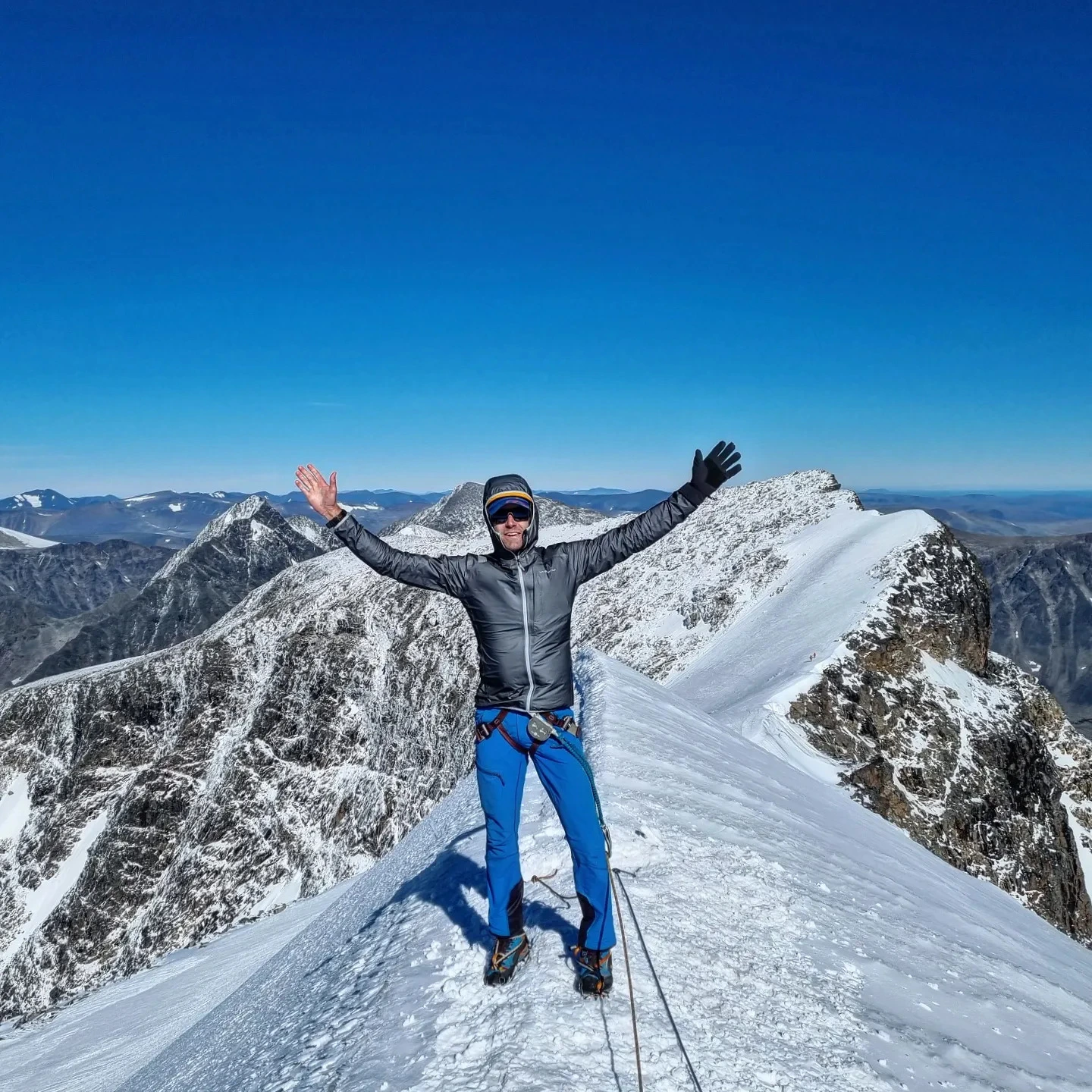
Image: Fredrik on the South Summit with the North Summit (Sweden’s highest point) in the background.
The first time I climbed Kebnekaise was in 1997 during my time as a ranger in Kiruna. That day, I didn’t see one eleventh of Sweden—I barely saw anything at all. It was a complete whiteout, flat light, no horizon to orient by. A total anticlimax. But Kebnekaise has a strange way of drawing you back. Over the years, I’ve returned many times—as a guide, during training, and in competitions like the Kebnekaise Classic.
For many, climbing Kebnekaise is a first step into higher mountains. We usually start in Nikkaluokta and hike the 19 kilometers to the mountain station, sometimes taking a boat across the lake for a brief rest. From there, the summit attempt unfolds over two days, often via the eastern route, with glacier travel and a via ferrata leading up to the South Summit. It’s physically demanding, but accessible to those who prepare properly. And preparation is everything—not just to reach the summit, but to fully appreciate it.
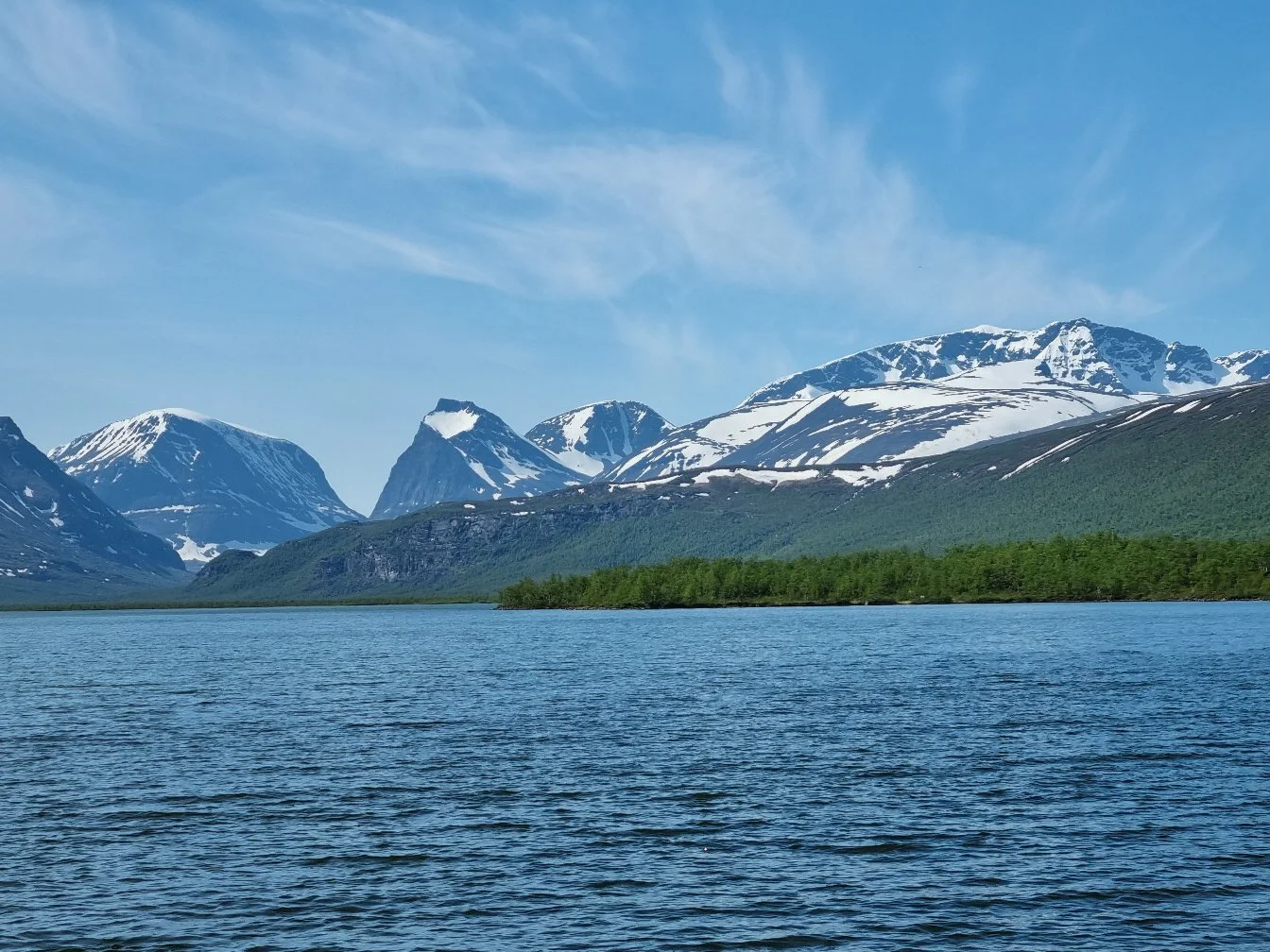
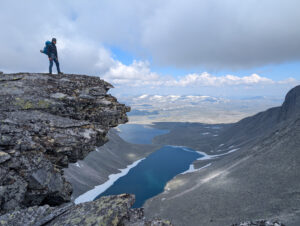
Image: Tuolpagorni and Kebnekaise from Lake Laddjujavri
In 2015, during the Kebnekaise Classic, I experienced one of those rare moments when everything aligns. The air was still, visibility nearly perfect, and the horizon felt endless. It was the kind of moment that makes you question your own intuition. Could it really be true that you could see one eleventh of Sweden—or was it simply the vastness playing tricks on me?
To find out, I contacted my friend Andreas Sandmon, a teacher of mathematics and physics. It turns out that what limits our vision isn’t the eye—it’s the curvature of the Earth. From the summit of Kebnekaise, the horizon lies roughly 160–170 kilometers away under ideal conditions. That creates a circular field of view with a radius of about 165 kilometers. But Kebnekaise sits close to the Norwegian border, meaning a large portion of what you see isn’t even Sweden. When you calculate it using map data, the conclusion becomes clear: you actually see significantly more than one eleventh of the country (see the YouTube episode for the exact answer: https://youtu.be/kbUlsLo6eHY). It’s a great example of how our intuition often fails when dealing with large scales.
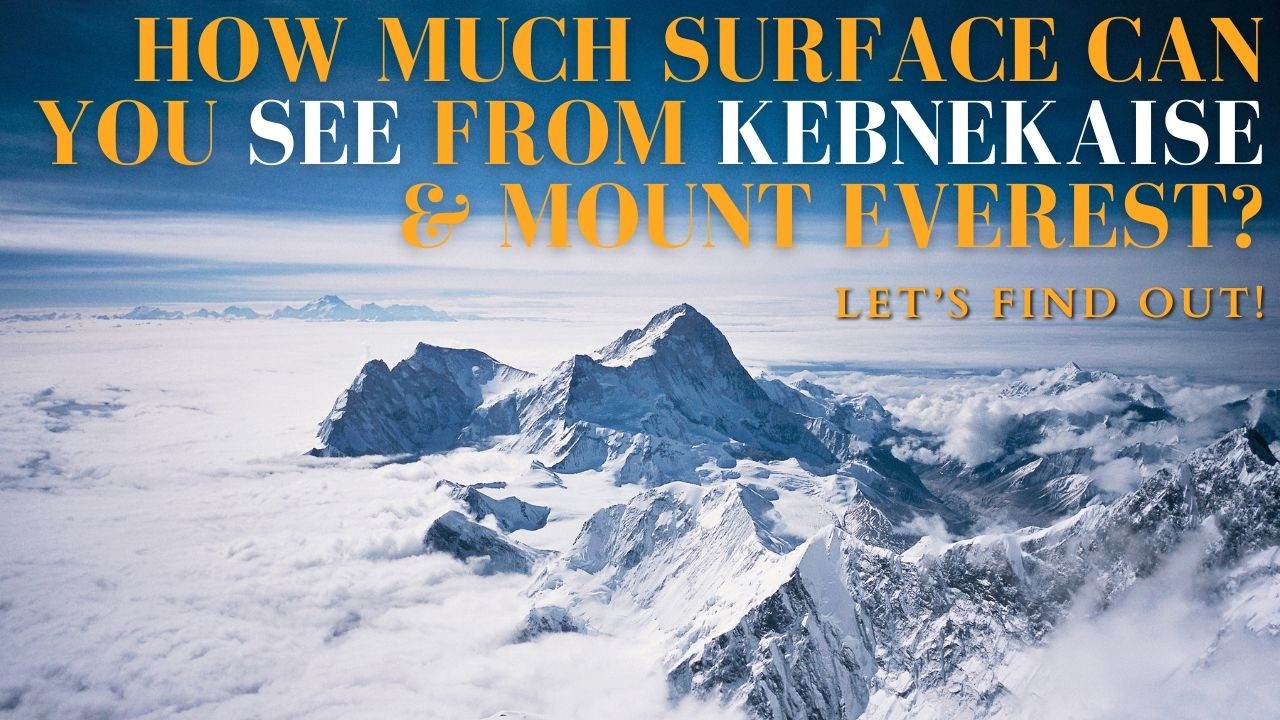
If you shift the perspective from Kebnekaise to Mount Everest, the scale changes dramatically—but the conclusion does not. From 8,849 meters, the horizon extends roughly 335 kilometers. I stood there in May 2006 under unusually stable conditions and was able to remain on the summit for nearly 40 minutes. The view was breathtaking. I saw Makalu rising in the distance—a mountain I later climbed as the first Swede, together with Niklas Hallström—and I could see Kanchenjunga about 125 kilometers away. It felt as if the world stretched on forever. But when you do the math, even from the highest point on Earth, you can see less than one percent of the planet’s surface. What feels infinite is, in reality, only a tiny fraction of the whole.
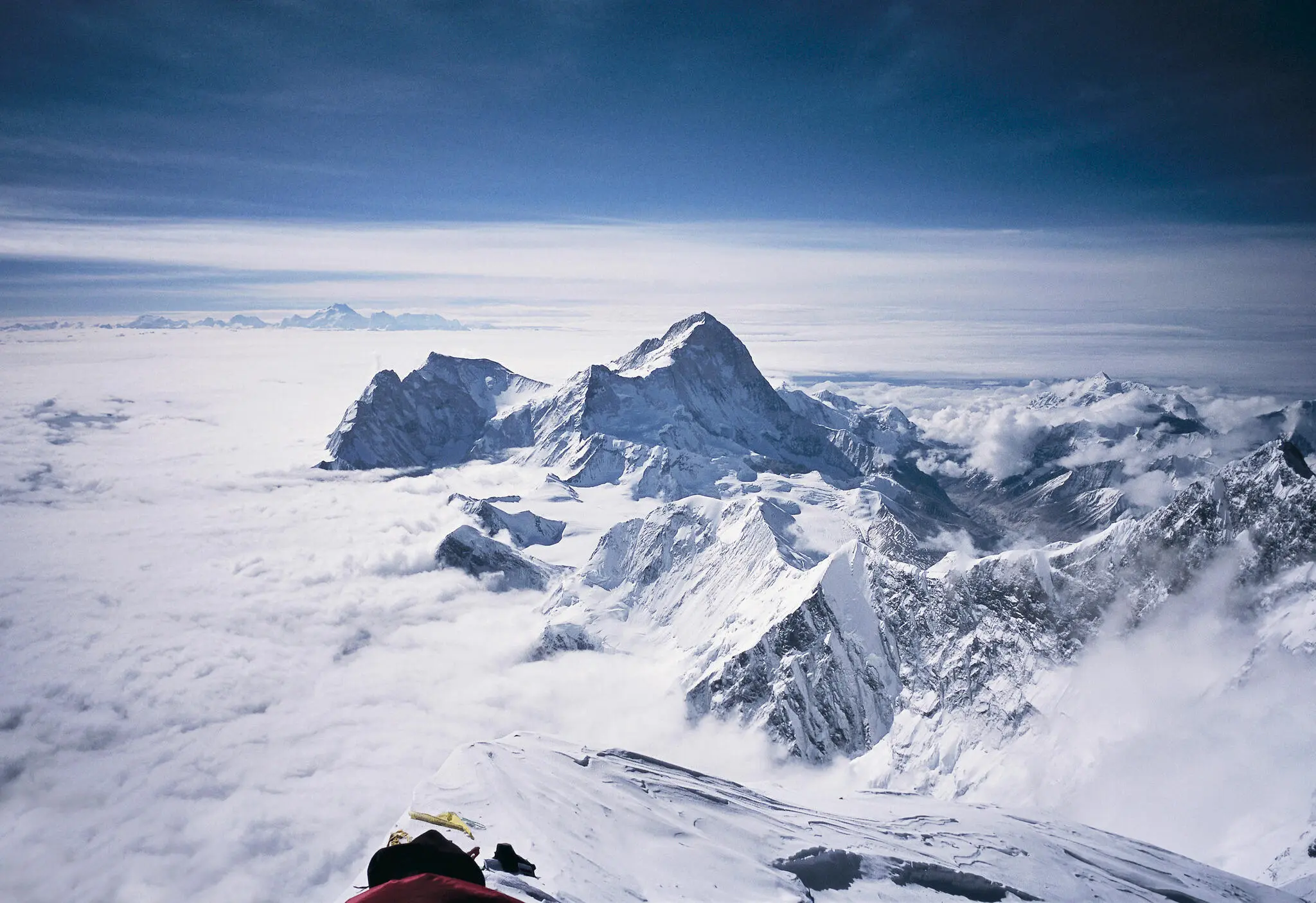
Image: The view from the summit of Mount Everest by Fredrik Sträng
Take it one step further—into space—and the perspective shifts again. At around 400 kilometers altitude, where astronauts like Christer Fuglesang operate, you can see a much larger portion of the planet. It’s not about better vision—it’s about distance. The farther away you are, the more of Earth’s curved surface falls within your field of view. Perspective, then, is not just about height, but about distance and angle.
So what is this really about? Partly numbers and geometry—but fundamentally something deeper. Standing on a mountain summit isn’t just about the view. It’s about the process—the training, the preparation, and every decision along the way. The view is a reward, but the transformation happens on the way up. Mountains don’t just show us how far we can see—they show us how small we are in relation to the world, and how much it takes to gain a new perspective.
We tend to believe we see more than we actually do—both literally and figuratively. But perhaps it’s not how much we see that matters, but what we do with that insight. Because even if we only see a fraction of the world from a summit, it may be enough to start asking better questions about our place in it.
Watch the YouTube episode here: https://youtu.be/kbUlsLo6eHY
——————————
About Fredrik Sträng:
Fredrik, in his leadership role, has summited seven of the world’s fourteen 8,000-meter peaks, set a Guinness World Record, and lectures on leadership, communication, decision-making, and crisis management.
Kind regards,
Fredrik Sträng
Climber – Speaker – Coach