How Do You Build Teams That Actually Want to Climb the Mountain?
By Fredrik Sträng
Whenever people apply to join one of my expeditions, I always begin with the same question: do you truly want to climb the mountain — or do you simply want to have it climbed for you? Almost everyone says they want to do the work themselves, but the truth only reveals itself once reality becomes uncomfortable. When exhaustion sets in, the weather turns hostile and uncertainty takes over, it quickly becomes clear who genuinely loves the process and who is only attracted to the idea of standing on the summit.
This applies to far more than mountaineering. I see the exact same dynamics in business and leadership. Today, many people seem more focused on what they personally gain from a project than on what they can contribute to the bigger picture. During my latest record-breaking expedition — climbing all 377 Norwegian peaks above 2,000 meters in just 68 days — that difference became impossible to ignore. What made the expedition possible was not only physical endurance, but the people around me. My climbing partners rarely asked what they themselves would get out of the project. Instead, they asked what the expedition needed in order to succeed.
And perhaps that is exactly where truly strong teams are built.
Modern motivational research consistently shows that people driven by meaning, responsibility and a sense of contribution develop greater resilience, creativity and long-term commitment than people motivated primarily by external rewards.
Feeling Truly Alive
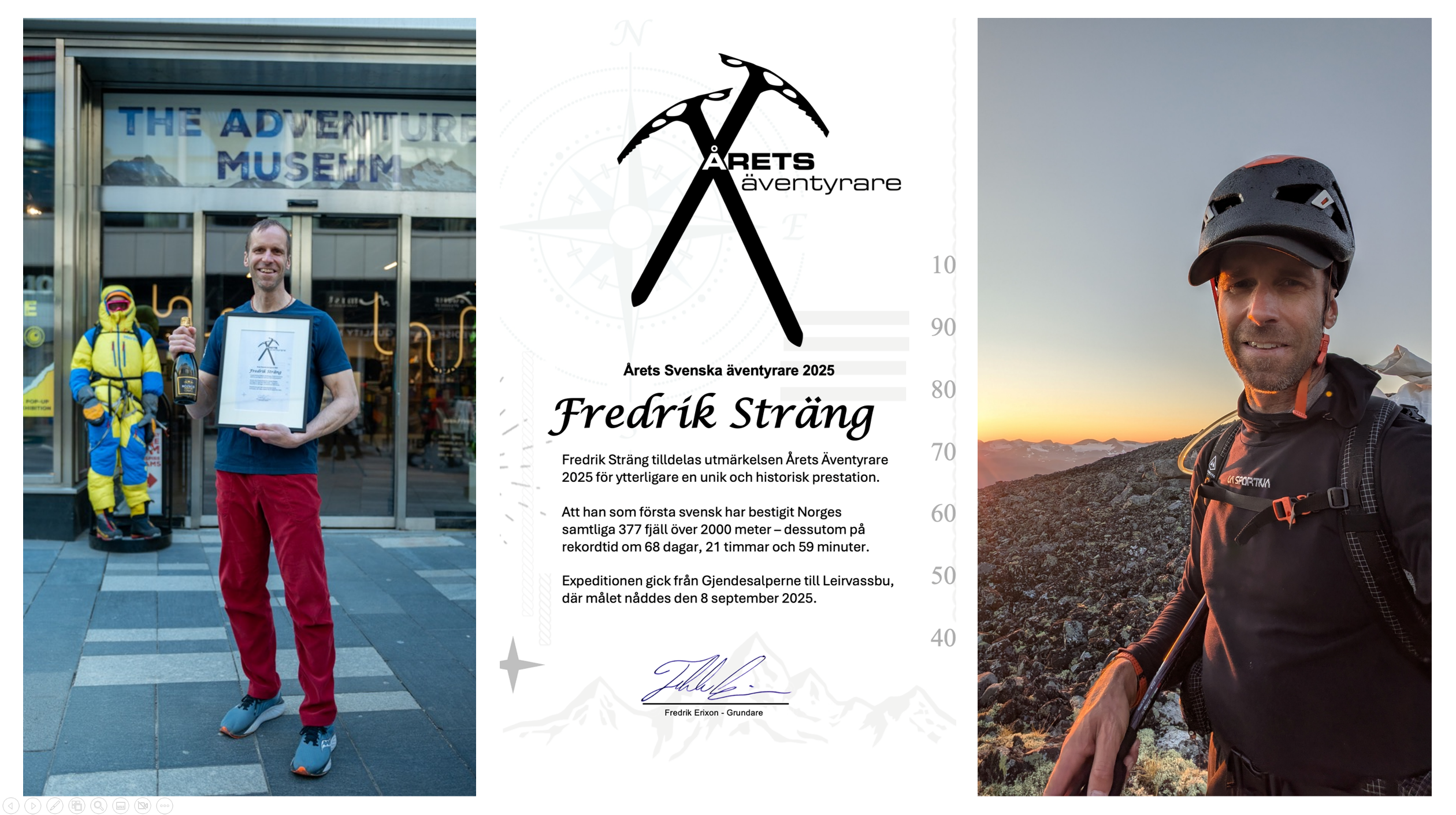
In April, I was named Adventurer of the Year in Sweden for the third time in my career. This time, it came after a project many people described as nearly impossible.
A few years ago, I was diagnosed with severe knee osteoarthritis — bone against bone — and doctors made it clear that I should probably never run again. The pain was at times so intense that even walking downstairs hurt. Shortly afterward, I completed one of the most extreme projects of my life.
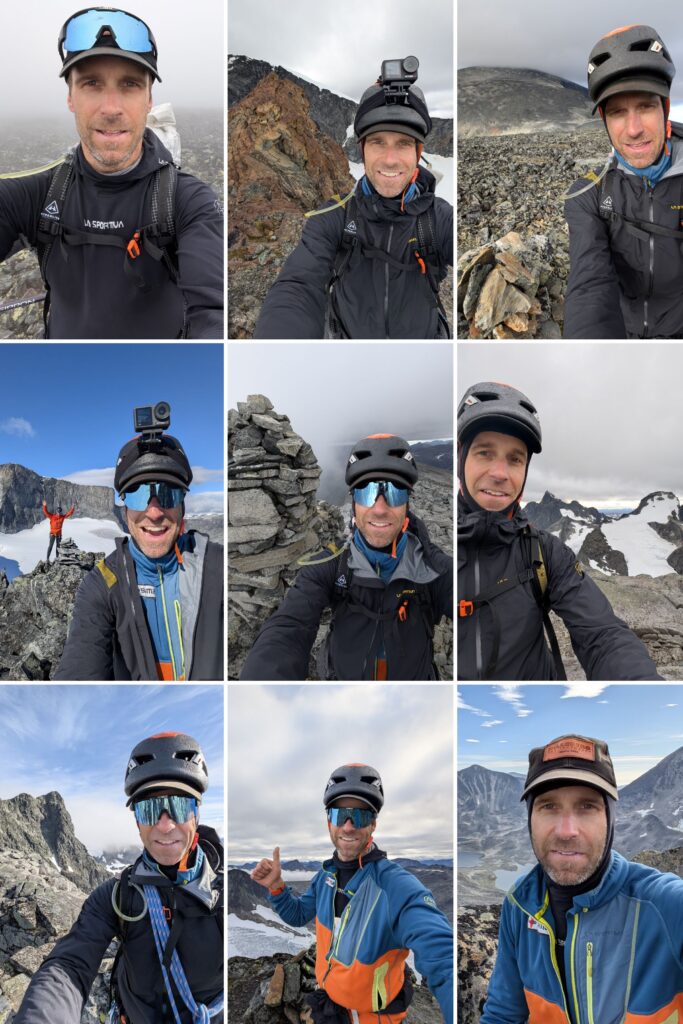
Over the course of 68 days, I climbed all 377 Norwegian peaks above 2,000 meters as the first Swede ever to do so. The expedition involved more than 120,000 vertical meters through some of the harshest environments in Scandinavia: snowstorms, lightning, exposed knife-edge ridges and endless kilometers of loose, unforgiving terrain. Day after day.
Most workplaces do not attract high performers by promising uncertainty, sleep deprivation and relentless adversity. Yet more and more people today seem to crave exactly that.
When I began the project, there was really only one thing I longed for: complete exhaustion. I wanted to feel the wind hammering against my face, to experience doubt, resistance and even moments of hopelessness — and still continue forward. I wanted to feel that I could still overcome obstacles.
It is the exact same thing I witness when guiding corporate groups on Kebnekaise or organizing survival camps in the Stockholm archipelago. People change when they are forced to confront their limitations. Confidence is not built through comfort. It is built through the experience of overcoming things you once believed were impossible.
Shackleton Understood Something Important
Polar explorer Sir Ernest Shackleton is said to have recruited participants for his Antarctic expedition with an advertisement that essentially promised cold, darkness, danger and an uncertain outcome. Despite that, thousands applied.
That says something fascinating about human nature. We like to believe that people primarily seek safety and comfort, but the truth appears far more complex. Many people are actually searching for meaning, challenge and the feeling of being fully present in life.
When I needed a team for my Norway project, I created my own version of such an advertisement. I described freezing winds, endless days of suffering, doubt and physical exhaustion. The reward was highly uncertain, but I promised one thing: participants would feel truly alive.
The response was overwhelming. People from all over the country reached out, but most disappeared as soon as the project became real. Some lacked the experience required once conditions turned brutal. Others primarily viewed the expedition as a way to accomplish their own personal goals.
What I actually needed were people willing to make the project bigger than themselves. And eventually, they appeared — those rare individuals who sacrificed time with family, turned down comfort and instead asked:
“What does the expedition need?”

Comfort Does Not Make Us Stronger
We live in a society where discomfort is increasingly treated as something to avoid at all costs. Yet both research and experience suggest the opposite.
Psychologists such as Angela Duckworth and Carol Dweck have demonstrated how people develop grit, resilience and long-term motivation through adversity, responsibility and the experience of mastering difficult things — not through constant comfort.
Perhaps that is why people today are drawn to ultramarathons, cold exposure, survival courses and extreme adventures. Not because they want to suffer, but because they want to feel something real.
I see this repeatedly when working with groups outdoors. When people are pushed beyond their comfort zones, something remarkable happens. They grow. They become more present, more focused and often significantly more confident in themselves.
That is also why I believe many modern organizations misunderstand engagement. Challenges are not always a problem. The right kind of challenge is often exactly what makes people feel alive and proud of what they do.
From a Hopeless Diagnosis to a New Reality
Behind the Norway project was also a brutal physical journey. After undergoing stem cell treatment at SLS in Stockholm, everything changed dramatically. From barely being able to move without pain, I gradually rebuilt my body. Today, I complete ultramarathons of up to 96 kilometers and no longer suffer from knee osteoarthritis.
Perhaps this is where I differ from many others. The more people tell me something is impossible, the more something inside me awakens.
When people say:
“That will never work.”
My instinctive reaction becomes:
“Then I’m probably onto something important.”
The world does not exactly suffer from a shortage of people explaining why things cannot be done. What it truly lacks are people unwilling to accept that answer.
Anyone who has ever tried to build something significant understands this feeling. Entrepreneurs, visionaries and adventurers all know what it feels like when the world doubts you while you yourself see the potential with absolute clarity.
“Dying Is Easy. Everything Else Is Hard.”
A few years ago, I heard a man in the Alaskan wilderness say something that stayed with me:
“Dying is easy. Everything else is hard.”
There is something deeply uncomfortable — and true — about those words. Giving up requires very little energy. Following the path of least resistance is almost always easier.
What actually requires strength is continuing when your body hurts, doubt eats away at you and people around you have already written you off.
At the same time, there is a unique pride in succeeding at something others dismissed as impossible. When success is built through discipline, adversity and persistence, you know it was earned.
Perhaps that is why I sometimes find it strange that society often celebrates luck more than perseverance. Lottery winners become heroes overnight, while people willing to risk everything for a vision are still often met with skepticism or cynicism.
Human Beings Are Not Built for Constant Comfort
Sometimes I wonder why so many people choose the easiest path the moment resistance appears. Perhaps it is natural. The universe itself moves toward energy minimization and entropy. Slowing down, giving up and choosing comfort is almost always easier.
The problem is that human beings do not seem to function particularly well without resistance. Muscles weaken without stress. The mind becomes more fragile without challenges. We are built for movement, effort and growth.
During the Norway expedition, I repeatedly found myself in situations that seemed hopeless. Injuries, brutal weather, sleep deprivation and collapsing logistics came one after another. But instead of becoming paralyzed by the problems, something strange happens to me under pressure: I become creative.
I start searching for solutions instead of excuses. I ask myself whether I have faced something similar before and whether it worked out back then. Almost always, the answer is yes. And if it worked out before, there is no reason to quit now.
Experience Builds Mental Strength
This is not about empty motivational quotes or simply “thinking positive.” Research on resilience shows that people who have previously overcome difficult challenges develop stronger belief in their own problem-solving ability. Psychologist Albert Bandura referred to this as self-efficacy.
Once you have gotten back up enough times, your brain begins to understand that future problems can also be handled.
Perhaps that is why I reacted so strongly when doctors told me I should never run again. I never thought:
“How will this work?”
Instead, I thought:
“To hell with that. I’m going to push even harder.”
A History of World-Class Achievements
In April, I was named Adventurer of the Year in Sweden for the third time. Previous achievements include becoming the first Swede to climb the Seven Summits and climbing two 8,000-meter peaks during the same season in Pakistan.
In 2026, I completed the record-breaking project of climbing all 377 Norwegian peaks above 2,000 meters in just 68 days as the first Swede ever to do so.
——————————
About Fredrik Sträng:
Fredrik, in his leadership role, has summited seven of the world’s fourteen 8,000-meter peaks, set a Guinness World Record, and lectures on leadership, communication, decision-making, and crisis management.
Kind regards,
Fredrik Sträng
Climber – Speaker – Coach